
What a Restaurant Merchant Cash Advance Really Costs

Answer target: a merchant cash advance is priced with a factor rate, so multiply the advance by the factor rate to get your total payback, then divide the extra cost by the number of months you expect to repay to see what it costs per month. That single calculation tells you more than any sales call. Run it before you sign, and compare the result against a term loan or a line of credit.
You get the call on a Tuesday. Someone offers you money by Friday, no collateral, no tax returns, a few months of bank statements. For a restaurant staring at a broken walk-in or a slow January, that timing is worth a lot. What most owners never get in that conversation is a plain number to compare against anything else.
This piece gives you the arithmetic. A merchant cash advance for restaurants is not priced the way a bank prices money, and the number the funder quotes you is not a rate in the sense you are used to. Once you convert it yourself, you stop negotiating in the dark.
What is a merchant cash advance, and why is it not a loan?

A merchant cash advance for restaurants is a purchase of your future receivables. The funder buys a slice of the sales you have not made yet, at a discount, and collects that slice as the sales come in. You are not borrowing money and paying it back with interest. You are selling tomorrow’s revenue for cash today.
That distinction is not a technicality, and it changes what you should expect. Because the transaction is a purchase rather than a loan, it usually sits outside state usury caps, and the funder has no obligation to express the cost as an annual rate. The paperwork will talk about a purchase amount, a purchased percentage and a remittance. None of those words mean interest.
It also changes who carries the risk. In a true advance, if your sales stop, the collection slows with them. That is the feature you are paying for. Whether your contract works that way is a question you need to answer before you sign, and we come back to it below.
How do you turn a factor rate into a real dollar cost?

Your funder quotes a factor rate. It looks like 1.28 or 1.35 or 1.42. Every merchant cash advance for restaurants is priced with one, and it is a multiplier rather than a percentage. The arithmetic is short.
Multiply the advance by the factor rate. That product is your total payback. Subtract the advance from it and you have the cost of the money in dollars. On a $60,000 advance at a 1.32 factor rate, your payback is $79,200 and your cost is $19,200. Nothing about that number changes if you repay faster.
Read that last sentence again, because it is the part that surprises people. On a term loan, paying early saves you interest. On an advance, the payback is fixed at signing. Repaying in five months instead of ten does not reduce what you owe by a dollar unless your contract contains an early-payoff discount in writing.
That is also why comparing a factor rate to an interest rate misleads you. A 1.32 factor looks close to a 32 percent rate. If you clear that $19,200 over roughly seven months, the cost of that money on an annualised basis is several times what the factor rate suggests. The shorter the repayment window, the more expensive the same factor rate becomes.
What does that cost look like against a restaurant’s margin?
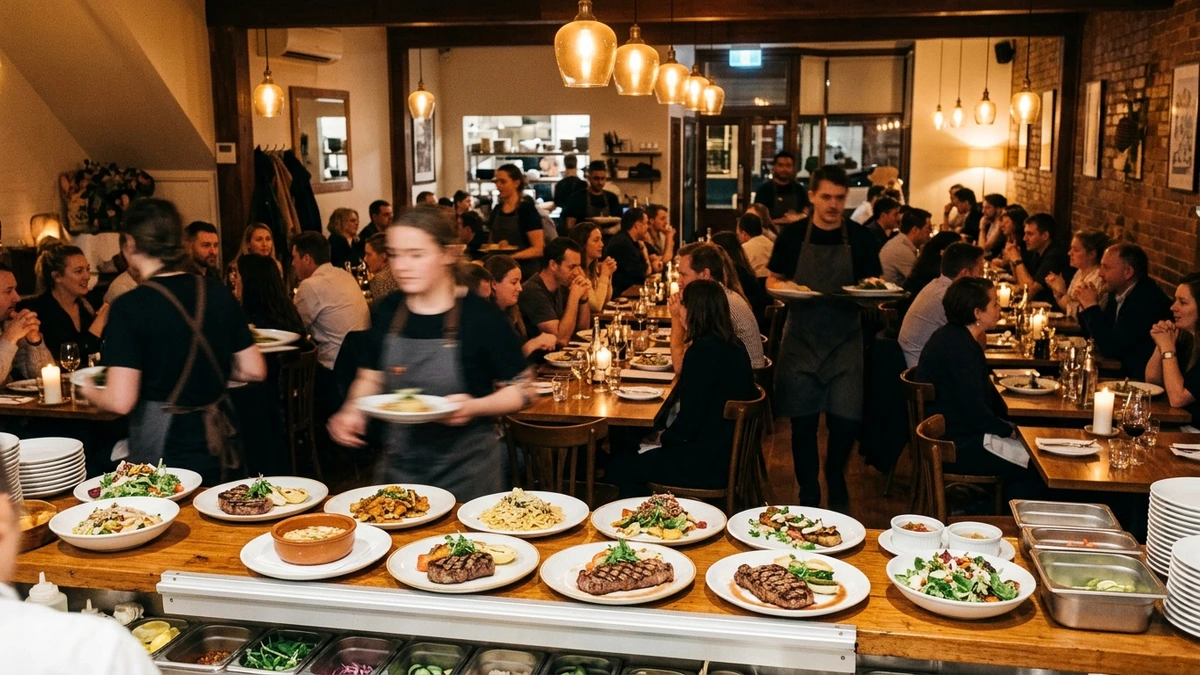
A cost of capital only means something next to what your restaurant earns. The National Restaurant Association’s cost analysis gives you the baseline. Before the pandemic, a typical independent restaurant spent roughly 33 cents of every sales dollar on food and another 33 cents on labour, with other expenses taking about 29 percent, leaving a pre-tax profit margin of roughly 5 percent.
Hold that 5 percent next to the $19,200 from the example above. At a 5 percent pre-tax margin, your restaurant has to generate $384,000 in additional sales to produce $19,200 of profit. The cost of one advance equals the profit on a third of a million dollars of food you have to buy, cook and serve.
The pressure is not hypothetical either. The same association analysis estimates total expenses for an average restaurant jumped 36 percent between 2019 and 2026, and reports that 42 percent of operators said their restaurant was not profitable in 2025. Money that is expensive in a good year becomes structural in a thin one, and your restaurant is trading in the same market those operators described.
None of this makes an advance the wrong answer. Speed has real value when a compressor dies in July. It means the decision deserves the same seriousness you would give a lease.
Which contract terms decide what you pay?

The factor rate sets the headline. Four clauses decide what the money does to you.
- The holdback percentage. This is the share of daily or weekly sales the funder takes. A 12 percent holdback on a $9,000 day is $1,080 gone before you pay a vendor.
- Fixed remittance versus true percentage. A fixed daily debit does not fall when sales fall. That converts the advance’s main protective feature into a fixed obligation on an unpredictable week.
- The reconciliation clause. This is the mechanism that adjusts your remittance when revenue drops. Some contracts require you to request it in writing inside a narrow window, with documentation. If reconciliation is discretionary rather than automatic, the risk sits with you.
- Fees stacked on the advance. Origination, underwriting, processing and ACH fees sit outside the factor rate and come out of the amount you receive, not the amount you repay.
Ask for each of those in writing before you decide. A funder who will not put the reconciliation mechanism in the contract has told you something useful about the product.
The Federal Trade Commission’s record shows why your paperwork matters. In a case the agency brought in June 2020 and won in October 2023, the court entered a permanent ban against a merchant cash advance operator over conduct that included misrepresenting the terms of the advances, making unauthorised withdrawals from customer accounts and requiring business owners to sign confessions of judgment. Other defendants in the matter settled with industry bans and more than $2 million in monetary relief.
What does a disclosure statute put in writing?

Several states now force commercial financing providers to hand you a standard disclosure sheet. California was first. Under Division 9.5 of the California Financial Code, added by Senate Bill 1235, a provider making a commercial financing offer of $500,000 or less must disclose the total amount of funds provided, the total dollar cost of the financing, the term or estimated term, the method, frequency and amount of payments, and a description of prepayment policies.
Look at that list. Every item on it is something you would need anyway to compare two offers side by side. The total dollar cost is the number to anchor on, because it is the one figure that does not move when someone reframes the deal.
Rules vary by state and by transaction, and where you operate changes what you are owed. That is a reason to ask for the same five items from every funder regardless of your state. Whether or not a statute compels the sheet where your restaurant sits, a funder who cannot produce those five numbers on request is not giving you enough to decide with.
Compare your restaurant funding options before you sign

Run the factor rate arithmetic on every offer you receive. Then run the same total-dollar-cost comparison against the alternatives, because an advance is rarely the only route open to a restaurant with steady deposits. A restaurant line of credit charges you only for what you draw. Restaurant working capital spread over a longer term costs less per month against your margin. Invoice factoring for restaurants fits catering and corporate accounts where the money is owed but slow.
Dine Well Financial connects restaurant owners with a lender network and lays the options next to each other with the numbers visible. If a cheaper structure fits your deposits and your time in business, you should be told that, even when it is not an advance. Call 800-664-0173 or check your options online, and bring the last three months of statements so the comparison is real rather than theoretical.
Frequently asked questions
Is a factor rate the same as an interest rate?
No. A factor rate is a multiplier applied once to the advance amount, and it fixes your total payback at signing. Interest accrues over time on the balance you still owe, which is why paying a loan early saves money and paying an advance early usually does not.
Does repaying a merchant cash advance early save me money?
Only if your contract contains an early-payoff discount in writing. The payback amount on a standard advance is set when you sign, so clearing it in four months rather than nine costs you the same dollars in a shorter window. Ask for the prepayment policy before you commit.
What holdback percentage should a restaurant expect?
There is no single answer, and the right question is what the holdback does to your worst week rather than your average one. Take your slowest week in the last year, apply the holdback to it, and check whether payroll and food orders still clear. If they do not, the structure is wrong even when the factor rate looks fine.
Can I get a merchant cash advance with bad personal credit?
Often yes, because funders weight your deposit history and time in business more heavily than a personal score. That flexibility is priced in, so expect a higher factor rate. If credit is the only obstacle, it is worth checking what bad credit restaurant funding options exist before accepting the first offer.
What is a confession of judgment, and should I sign one?
It is a clause in which you agree in advance to a judgment against you if the funder says you defaulted, which lets them move against your accounts without a hearing. Federal enforcement has targeted operators who used them against small businesses. Read any advance contract specifically for this clause and take advice before signing one.
How fast does a restaurant receive funds?
Advances are built for speed and commonly fund within a few business days once statements are reviewed. Speed is the product you are paying a premium for, so it is worth asking whether your need is genuinely urgent. If it is not, a slower and cheaper structure will usually serve you better.

Daniel Harper writes about restaurant financing, merchant cash advance risk, and cash flow strategy for Dine Well Financial. His work focuses on helping independent restaurant owners compare funding options with clear numbers before they sign anything. He has covered alternative lending for the food service industry since 2019. More from Daniel Harper.
Leave a Reply